The Science Behind UV-Cured Adhesives: Innovations, Applications, and Industry Impact
In an era defined by precision engineering and rapid technological advancement, UV-cured adhesives have emerged as a cornerstone in modern manufacturing processes. These specialized materials offer unmatched bonding efficiency, durability, and versatility across industries ranging from electronics to aerospace.
Unlike traditional adhesive methods that rely on heat or chemical solvents, UV curing leverages ultraviolet light to trigger a photochemical reaction within the adhesive formulation. This process not only accelerates bond formation but also minimizes environmental impact through reduced volatile organic compound emissions.
Fundamental Principles of UV Curing Technology
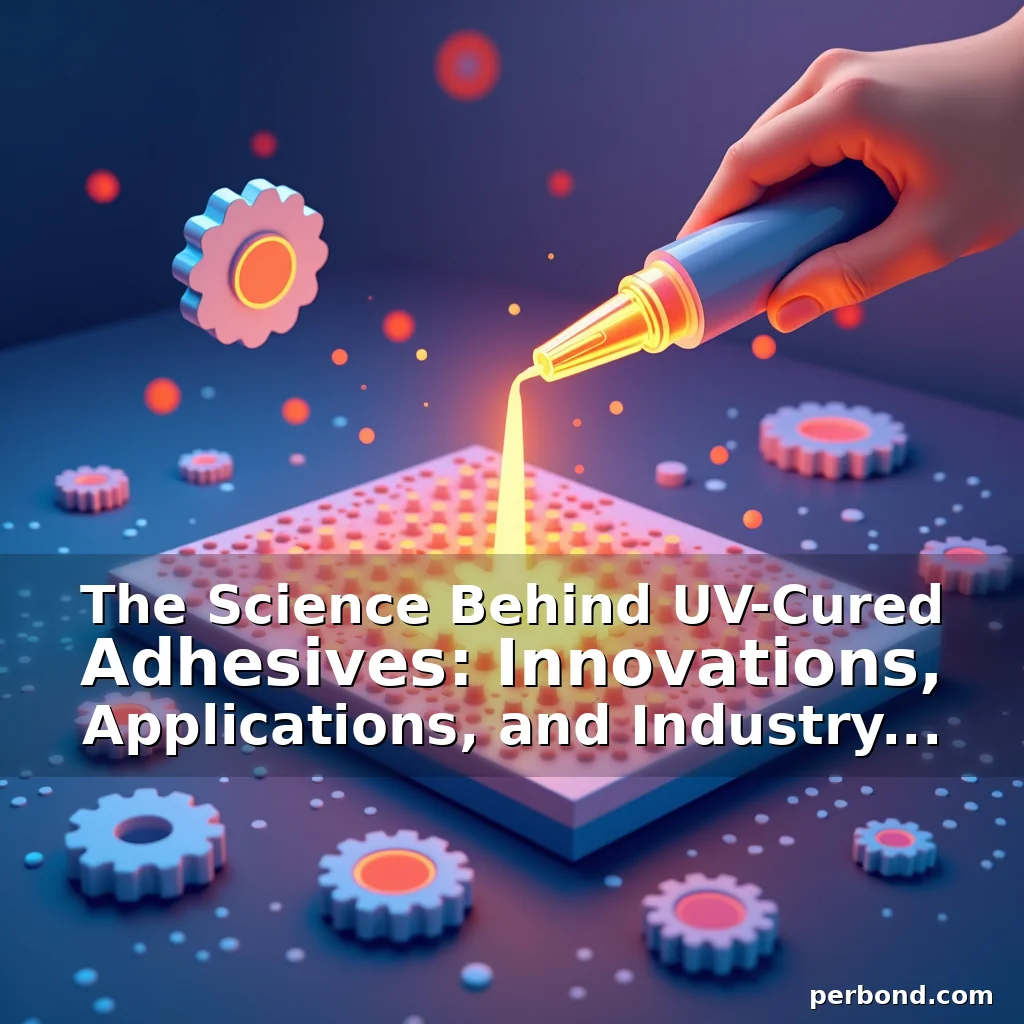
At its core, UV curing technology operates on the principle of photopolymerization—a complex yet highly efficient method of hardening adhesives using ultraviolet radiation. When exposed to UV light, specially formulated resins undergo molecular cross-linking, transforming liquid adhesives into solid, durable bonds almost instantaneously.
This transformation occurs at the molecular level without requiring high temperatures or extended drying periods. The result is a seamless integration between substrates that maintains structural integrity under extreme conditions such as thermal cycling or mechanical stress.
The composition of UV-curable adhesives typically includes three key components:
- Monomers: Provide flexibility while maintaining strong intermolecular forces during polymerization
- Oligomers: Act as backbone structures that determine final material properties like hardness and elasticity
- Photoinitiators: Absorb UV energy and initiate free radical chain reactions necessary for curing
Certain additives may be incorporated depending on application requirements—these can include flame retardants for electrical applications or anti-static agents for sensitive electronic assemblies.
Mechanisms of Action: How UV Light Transforms Liquid to Solid
The conversion from liquid adhesive to hardened surface begins when photons from a UV source interact with photoinitiator molecules suspended within the resin matrix. This interaction creates excited-state species capable of initiating polymerization reactions.
As these reactive intermediates propagate through the adhesive layer, they form covalent bonds between monomer units. This network growth continues until complete gelation occurs, resulting in a cured film exhibiting exceptional resistance to moisture, chemicals, and abrasion.
One crucial factor influencing cure speed is wavelength specificity—the most effective range generally falls between 280nm and 400nm. Manufacturers carefully select photoinitiator combinations to optimize absorption characteristics at targeted wavelengths.
Additionally, light intensity plays a significant role; higher irradiance levels enable faster curing cycles while ensuring even distribution of energy across bonded surfaces.
Comparative Analysis: UV vs Traditional Curing Methods
When comparing UV curing techniques against conventional methods like solvent-based systems or thermal curing, several distinct advantages become apparent. Perhaps most notably, UV curing eliminates the need for flammable solvents that pose safety risks in industrial environments.
Traditional hot melt adhesives require substantial amounts of energy to reach activation temperatures, often exceeding 150°C. In contrast, UV curing systems operate effectively at ambient room temperature, significantly reducing overall production costs.
A side-by-side comparison reveals:
- Drying Time: Minutes instead of hours/days
- Energy Consumption: 60% less than thermal methods
- VOC Emissions: Virtually zero compared to solvent-based alternatives
- Bond Strength: Up to 3x greater due to denser molecular networks
These factors collectively contribute to increased throughput rates and improved workplace safety profiles in manufacturing facilities utilizing UV curing technologies.
Industrial Applications Across Diverse Sectors
The adaptability of UV-cured adhesives has led to their widespread adoption across numerous industries. From microelectronics assembly where dimensional stability is critical, to automotive bodywork requiring robust impact resistance, these materials continue redefining performance benchmarks.
In the medical device industry, UV-curable epoxies are employed for sealing sensor housings and assembling implantable devices. Their biocompatibility and ability to withstand sterilization protocols make them ideal candidates for life-support equipment.
The construction sector benefits greatly from UV adhesives used in laminating glass panels, securing insulation foam boards, and reinforcing composite flooring systems. Recent innovations now allow for transparent bonding solutions suitable for architectural glazing applications.
Packaging manufacturers utilize UV curable coatings to protect printed circuits on smart cards and create tamper-evident seals on pharmaceutical blister packs. These applications demonstrate both functional utility and aesthetic appeal simultaneously.
Environmental Considerations and Sustainability Metrics
With increasing global emphasis on sustainable manufacturing practices, UV-cured adhesives present compelling ecological advantages over conventional alternatives. The absence of VOCs means fewer harmful atmospheric emissions contributing to air pollution and ozone depletion.
Lifecycle analysis studies show that UV curing systems consume approximately 35% less energy compared to thermal curing processes. This reduction translates directly into lower carbon footprints associated with adhesive application stages in product manufacturing.
Sustainable packaging initiatives benefit immensely from waterborne UV formulations which eliminate hazardous solvent waste streams entirely. These eco-friendly options maintain excellent adhesion qualities while meeting stringent regulatory standards regarding toxic substance exposure limits.
Furthermore, advances in recyclable substrate compatibility mean many UV-bonded products can be disassembled and recycled at end-of-life without compromising structural integrity—an essential consideration for circular economy models.
Rapid Prototyping and Customization Capabilities
Modern UV adhesive systems support advanced customization possibilities through precise control over viscosities, refractive indices, and thermal expansion coefficients. Engineers can tailor adhesive properties to match specific joint geometries and loading scenarios.
For prototyping purposes, low-viscosity variants enable fine-tolerance bonding operations required in optoelectronics assembly. High-modulus versions provide reinforcement capabilities useful in structural bonding applications involving vibration damping requirements.
Custom color pigmentation allows for visual inspection features embedded within adhesive layers themselves. This capability proves particularly valuable in quality assurance procedures for aerospace component assemblies.
Some formulations incorporate fluorescent markers detectable under blacklight illumination, enhancing traceability and defect detection capabilities during automated inspection routines.
Challenges and Limitations in Practical Implementation
While offering numerous benefits, successful implementation of UV-cured adhesives requires careful attention to several technical constraints. One primary limitation relates to transparency requirements—substrates must permit sufficient UV penetration for thorough curing to occur.
Materials containing metal fillers or pigments often interfere with light transmission, necessitating alternative approaches such as post-cure baking ovens or dual-cure systems combining UV and thermal activation mechanisms.
Surface preparation remains another critical factor affecting bond strength outcomes. Proper cleaning and primer application ensure optimal adhesion between dissimilar materials experiencing differential thermal expansion behaviors.
Cost considerations must also be weighed; although long-term savings exist through reduced labor and energy consumption, initial investment in UV curing equipment represents a capital expense requiring careful ROI calculations.
Future Trends and Technological Advancements
Ongoing research aims to expand the applicability domain of UV-curable materials through novel photoinitiator designs and hybrid system development. Scientists are exploring visible-light initiated systems that could potentially replace current UV sources in certain applications.
Nanotechnology integration promises enhanced mechanical properties by incorporating nano-silica or graphene reinforcements into base polymer matrices. These additions improve scratch resistance while maintaining optical clarity in transparent adhesive films.
Smart adhesive developments featuring self-healing capabilities represent an exciting frontier. Microcapsules loaded with healing agents rupture upon crack propagation, enabling automatic repair mechanisms within bonded interfaces.
Advances in LED curing technology facilitate more compact, energy-efficient lighting arrays suited for robotic automation setups commonly found in modern fabrication lines.
Best Practices for Optimal Performance
To maximize effectiveness of UV-cured adhesives, adherence to standardized operational protocols becomes essential. Surface cleanliness assessments should precede any bonding operation to remove contaminants that might compromise interfacial adhesion strengths.
Proper viscosity matching ensures uniform coating thicknesses preventing void formation beneath bonded joints. For thick-section applications, multi-stage curing regimens may prove beneficial to achieve full penetration depth.
Regular maintenance schedules for UV curing units help sustain consistent output quality. Lens alignment checks and filter replacements prevent degradation of emitted light spectra affecting cure efficacy.
Documentation of process parameters including irradiance levels, dwell times, and spectral outputs provides traceability for quality assurance audits and troubleshooting exercises when unexpected failures arise.
Conclusion
UV-cured adhesives represent a transformative force in contemporary manufacturing landscapes, continuously evolving alongside emerging scientific discoveries and engineering challenges. Their inherent advantages position them as leaders among advanced bonding solutions available today.
By understanding fundamental principles behind their operation and staying abreast of ongoing innovations, professionals within the PerBOND community can harness these remarkable materials to drive progress in their respective fields while upholding rigorous standards of excellence and sustainability.