Mastering Epoxy Bonding: Advanced Techniques and Applications for Precision Engineering
Epoxy bonding stands at the intersection of chemistry and engineering, offering unparalleled strength and versatility for industrial applications. From aerospace to medical devices, its role continues to evolve, driven by innovation in material science and manufacturing processes.
The Perbond community recognizes epoxy as a cornerstone technology, enabling breakthroughs in adhesion quality, durability, and design flexibility. This guide explores advanced techniques, real-world applications, and best practices tailored for professionals seeking mastery over this critical bonding method.
Understanding the Science Behind Epoxy Bonding
Epoxy systems consist of two primary components—a resin and a hardener—that react chemically to form a durable polymer network. This reaction, known as cross-linking, creates strong covalent bonds responsible for epoxy’s exceptional mechanical performance.
The curing process involves molecular rearrangement as the mixture transitions from liquid to solid state. Temperature, humidity, and catalysts significantly influence the rate and completeness of this transformation, making precise control essential for optimal results.
- Resin Types: Epoxy resins vary widely, from low-viscosity liquids suitable for gap-filling to high-strength variants used in structural applications.
- Cross-Link Density: Higher cross-link density improves thermal stability but may reduce impact resistance, requiring careful balance based on project requirements.
Surface energy plays a crucial role in adhesion; properly prepared substrates maximize interfacial bonding forces, ensuring long-term reliability in service environments.
Molecular weight distribution affects viscosity and flow characteristics during application. Lower molecular weight resins offer faster cure times but may compromise final tensile strength compared to higher-molecular-weight alternatives.
Applications Across Industries
The aerospace industry relies heavily on epoxy bonding for assembling composite structures, fuel tanks, and engine components. Its ability to withstand extreme temperatures and vibration makes it indispensable in aircraft construction.
In the automotive sector, epoxy adhesives replace traditional fasteners in body panels, reducing vehicle weight while maintaining structural integrity. Recent advancements include UV-curable epoxies for rapid assembly lines.
Aerospace Innovations with Epoxy Adhesives
Modern jet engines utilize vacuum-bonded honeycomb core sandwiches bonded with aerospace-grade epoxies. These configurations achieve remarkable strength-to-weight ratios exceeding conventional materials by up to 40%.
Data from NASA research shows that carbon fiber reinforced polymers bonded with modified epoxy systems exhibit fatigue life improvements of 60% compared to riveted joints, revolutionizing airframe design.
Biomimetic epoxy composites inspired by natural nacre structures demonstrate exceptional crack propagation resistance, opening new possibilities for damage-tolerant aircraft interiors.
Selecting the Right Epoxy Resin for Your Project
Choosing the correct epoxy formulation requires evaluating environmental exposure conditions, mechanical load requirements, and desired cure time parameters. Compatibility with substrate materials also influences adhesive selection.
For outdoor applications, UV-resistant epoxies containing hindered amine light stabilizers extend service life by preventing yellowing and embrittlement caused by prolonged sunlight exposure.
- Thermal Expansion Matching: Select epoxies with coefficient of thermal expansion (CTE) close to substrate CTE to minimize stress-induced failures.
- Chemical Resistance: Evaluate resistance profiles against solvents, fuels, and lubricants common in target operating environments.
Hygroscopicity considerations become critical for electronic assemblies—low moisture absorption epoxies prevent microcracking due to water vapor pressure differentials during temperature cycling tests.
Best Practices for Surface Preparation
Rigorous surface preparation remains the most critical factor affecting bond quality. Contaminants such as oils, dust, and oxidation layers must be removed before applying epoxy adhesive.
Surface activation methods range from simple solvent wiping to plasma treatment and grit blasting. Abrasive blasting typically produces rougher surfaces enhancing mechanical interlocking effects.
For metallic substrates, phosphoric acid etching creates microscopic pores that increase surface area available for chemical bonding, improving lap shear strengths by up to 35% compared to unetched surfaces.
Non-polar plastics often require primer coatings containing silane coupling agents to enhance adhesion through both physical anchoring and chemical interaction mechanisms.
Curing Methods and Their Impact on Strength
Cure schedules significantly affect final properties; elevated temperature curing accelerates cross-linking reactions but may induce residual stresses in thick laminates.
Oven curing provides uniform temperature distribution ideal for complex geometries, whereas room temperature cures allow for easier handling but result in longer processing times.
- Two-Step Cure Processes: Some aerospace epoxies employ initial heat cure followed by post-cure steps at higher temperatures to fully develop mechanical properties.
- Vacuum Bagging: Removes entrapped air bubbles during cure, resulting in denser microstructures with improved fracture toughness metrics.
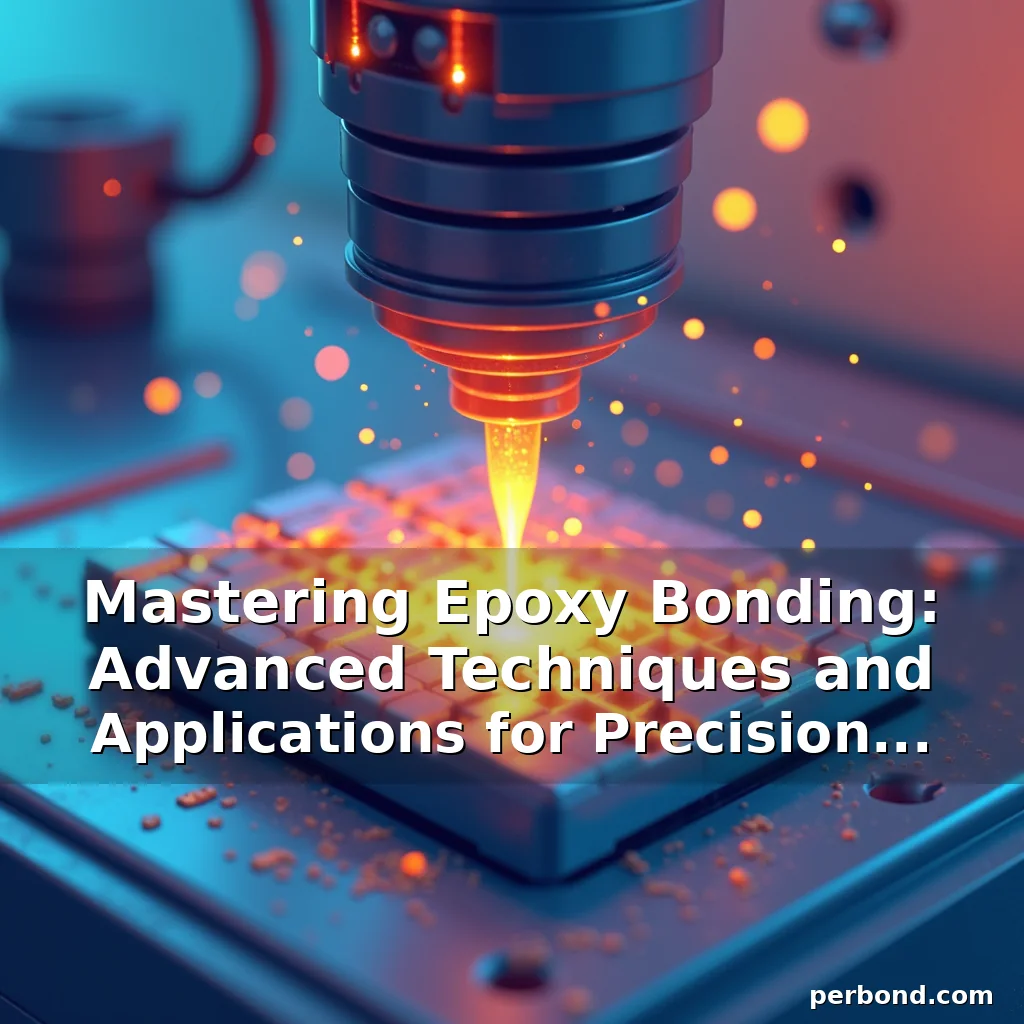
Laser-assisted curing offers localized heating capabilities for precision parts, minimizing thermal distortion risks associated with global heating methods.
Common Challenges in Epoxy Bonding and Solutions
Poor mixing ratios frequently lead to incomplete curing and weak bonds. Modern dispensing systems equipped with metering pumps ensure accurate component proportioning down to ±1% tolerance levels.
Viscosity issues arise when working with small gaps or porous substrates. Low-viscosity formulations combined with flow promoters enable penetration into intricate void spaces without compromising structural rigidity.
Outgassing problems occur when volatile substances trapped beneath the adhesive layer expand during curing. Incorporating degassing additives reduces bubble formation by up to 80% in sensitive optical applications.
Moisture sensitivity presents challenges in humid environments. Moisture curable epoxies provide alternative solutions by eliminating the need for strict dryroom conditions during application.
Environmental Considerations and Sustainability
The epoxy industry faces increasing demands for eco-friendly products featuring reduced VOC emissions and recyclability features. Water-based epoxies represent a promising shift toward greener manufacturing practices.
Life cycle assessments show that recycled epoxy composites can achieve up to 90% of original mechanical properties after proper depolymerization treatments, addressing end-of-life concerns effectively.
Energy consumption during production remains a focal point for sustainability initiatives. Research indicates that optimizing cure cycles can reduce factory energy usage by 25-35% without sacrificing product quality.
Biobased epoxy resins derived from renewable resources demonstrate comparable performance to petroleum-derived counterparts while lowering carbon footprint by approximately 40% across typical service lifetimes.
Advanced Testing Protocols for Quality Assurance
Destructive testing methodologies remain vital for verifying bond integrity despite rising costs. Lap shear, peel, and cleavage tests quantify strength values according to ASTM standards for comparative analysis.
Non-destructive evaluation techniques like ultrasonic thickness gauging and thermography detect hidden flaws without damaging test specimens. Digital image correlation provides quantitative strain mapping data useful for failure mode analysis.
- Accelerated Aging Tests: Simulate decades of service in weeks by exposing samples to cyclic temperature/humidity regimes and tracking property degradation rates.
- Fatigue Testing Machines: Apply controlled loading patterns to assess endurance limits under repeated stress conditions mimicking actual operational scenarios.
Recent developments in nanoindentation allow measuring local modulus variations at micrometer scales, revealing early-stage defect development invisible to macro-level inspection methods.
Fractographic analysis of failed samples identifies root causes through scanning electron microscopy, guiding corrective actions for future bonding operations.
Future Trends in Epoxy Technology Development
Nanocomposite epoxies incorporating graphene oxide or carbon nanotubes promise unprecedented combinations of strength, conductivity, and self-healing capabilities currently under active investigation.
Smart epoxy systems embedded with piezoelectric sensors enable real-time monitoring of structural health indicators such as strain, temperature fluctuations, and delamination progression.
Additive manufacturing integration opens new frontiers with 3D printable epoxies capable of producing complex geometries previously impossible to fabricate using traditional lamination techniques.
Self-repairing epoxies utilizing microcapsules filled with healing agents respond automatically to cracks by releasing encapsulated compounds that initiate repair processes upon rupture.
Conclusion
Epoxy bonding represents a dynamic field continuously shaped by scientific discoveries and technological advances. Mastery requires understanding fundamental principles alongside adapting to emerging innovations transforming modern manufacturing landscapes.
By prioritizing rigorous surface preparation, selecting appropriate formulations, implementing effective curing strategies, and embracing cutting-edge analytical tools, professionals can unlock new dimensions of performance and reliability in their bonding projects.