The Science Behind UV-Cured Adhesives: Innovations, Applications, and Industry Impact
In an era defined by technological advancement and industrial efficiency, UV-cured adhesives have emerged as a transformative force across various sectors. These specialized bonding agents offer rapid curing times, exceptional durability, and environmental benefits that align seamlessly with modern manufacturing demands.
Unlike traditional adhesives that rely on heat, solvents, or extended drying periods, UV-cured adhesives harness ultraviolet light to initiate a chemical reaction that solidifies the bond almost instantly. This innovation has redefined standards in industries ranging from electronics to aerospace engineering.
Understanding the Chemistry of UV-Cured Adhesives
At their core, UV-cured adhesives are formulated using photoinitiators—compounds that absorb UV radiation and trigger polymerization reactions within the adhesive material. This process transforms liquid monomers and oligomers into a hardened, durable film at the molecular level.
The key components include acrylates, epoxies, and silicones, each offering distinct properties tailored to specific applications. Acrylic-based formulations, for instance, provide excellent flexibility and clarity while maintaining strong cohesive strength.
- Photoinitiators: Essential catalysts that convert absorbed UV energy into free radicals, initiating cross-linking between molecules.
- Oligomers: The backbone structure responsible for determining final mechanical and thermal performance characteristics.
Rapid Curing Mechanisms: How It Works
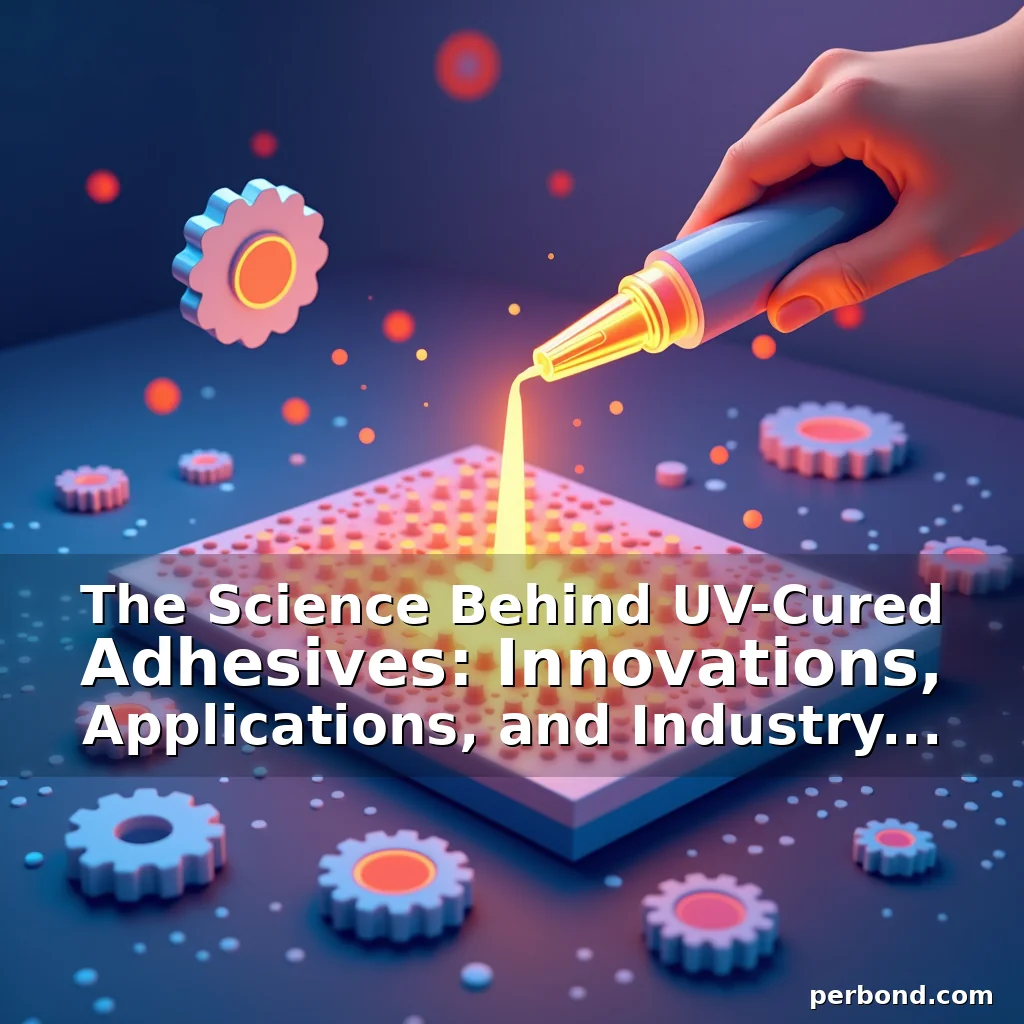
The curing process begins when UV light interacts with photoinitiator molecules, causing them to decompose and generate highly reactive species such as free radicals or cations. These reactive intermediates then propagate through the adhesive matrix, linking individual molecules together.
This chain-reaction mechanism allows for near-instantaneous bonding once exposed to sufficient UV intensity. Unlike conventional adhesives requiring hours or days to dry naturally, UV systems can achieve full cure in seconds under controlled conditions.
Critical Parameters Affecting Cure Efficiency
Several variables influence how effectively these adhesives respond to UV exposure. Light wavelength typically ranges between 280-420 nm, depending on formulation specifics and desired outcomes. Higher intensities generally reduce curing time but may risk overheating sensitive substrates.
The thickness of applied layers also plays a crucial role; excessively thick coatings can hinder penetration depth, resulting in incomplete curing at deeper levels. Manufacturers must balance application methods against required throughput rates and product quality requirements.
Industrial Applications Across Diverse Sectors
Electronics manufacturing represents one of the most significant adopters of UV technology due to its compatibility with miniaturized components and high-volume assembly lines. Circuit boards, sensors, and optoelectronic devices benefit greatly from quick-setting adhesives without damaging delicate circuits.
Aerospace engineers leverage UV-cured solutions for bonding composite materials where weight reduction is critical yet structural integrity remains paramount. Their ability to withstand extreme temperatures (-65°F to +392°F) makes them ideal candidates for spacecraft seals and internal component fixation.
Advantages Over Traditional Bonding Methods
Compared to solvent-based alternatives, UV systems eliminate volatile organic compounds (VOCs), contributing positively to both workplace safety and regulatory compliance. They also reduce overall production costs by minimizing energy consumption associated with heating processes.
Additionally, they enable greater design freedom during prototyping stages since there’s no need to wait for lengthy drying cycles before handling assembled parts. This accelerates development timelines significantly without compromising end-product reliability.
Sustainability Considerations in Modern Formulations
Eco-conscious manufacturers increasingly prioritize bio-based raw materials in new adhesive blends. Some producers now incorporate plant-derived resins alongside synthetic polymers, aiming to create products with lower carbon footprints without sacrificing technical specifications.
Recycling initiatives related to cured residues present another area undergoing active research. While fully polymerized films remain inert and non-toxic, ongoing studies explore ways to reclaim unused portions safely rather than disposing them conventionally.
Potential Challenges and Limitations
Despite numerous advantages, certain constraints exist regarding optimal usage scenarios. For example, transparent substrates pose challenges because visible light cannot penetrate sufficiently to activate deeper layers unless additional reflective surfaces or secondary irradiation techniques are employed.
Metallic surfaces often require pretreatment steps involving plasma cleaning or surface activation treatments prior to applying adhesive layers. Without adequate preparation, poor wetting behavior could lead to weak interfacial bonds despite perfect bulk material cohesion.
Futuristic Developments and Research Directions
Scientists continue exploring novel photoinitiator chemistries capable of responding to different wavelengths beyond standard UVA/UVC bands. Such advancements might allow broader applicability including integration within existing LED lighting infrastructures used elsewhere in factories.
Nanotechnology enhancements show promise too—incorporating nanostructured fillers into base matrices promises improved mechanical resilience along with enhanced optical transparency suitable even for display panel encapsulation purposes.
Conclusion
As industries evolve toward faster, cleaner, and smarter manufacturing practices, UV-cured adhesives stand out as essential tools enabling progress. Their unique combination of speed, precision, and sustainability positions them well for continued growth across emerging markets worldwide.
For professionals seeking reliable bonding solutions that meet today’s stringent operational needs while supporting long-term ecological goals, embracing UV technologies offers tangible competitive advantages worth pursuing actively.