The Power Behind Precision: Understanding High-Strength Adhesives in Modern Engineering
In an era where innovation drives progress, the role of materials science has never been more critical. Among these advancements, high-strength adhesives stand out as a cornerstone technology enabling breakthroughs across industries—from aerospace engineering to medical device manufacturing.
These specialized bonding agents have revolutionized how we approach structural integrity and material compatibility. By replacing traditional fastening methods with seamless connections, they offer unparalleled advantages in weight reduction and design flexibility that are reshaping modern construction practices.
Defining High-Strength Adhesives: A Technical Overview
High-strength adhesives represent a class of bonding solutions engineered to withstand extreme conditions while maintaining exceptional performance characteristics. These advanced materials typically exhibit tensile strengths exceeding 5,000 psi, making them suitable for applications requiring robust mechanical properties.
Differentiating factors include their ability to bond dissimilar substrates effectively—whether it’s metal-to-plastic interfaces or composite-to-ceramic joints. This versatility is achieved through sophisticated molecular structures designed specifically for interfacial strength optimization.
- Molecular composition: Epoxies, polyurethanes, and acrylic-based systems dominate due to their cross-linking capabilities which enhance cohesive strength at microscopic levels.
- Curing mechanisms: From UV light activation to moisture cure systems, various methodologies ensure optimal bond development without compromising substrate integrity.
The chemical nature of these adhesives plays a crucial role in determining their final mechanical behavior. For instance, epoxide resins form three-dimensional networks that distribute stress evenly under load, preventing premature failure points.
Temperature resistance ranges vary significantly depending on formulation specifics. While some industrial-grade products maintain integrity up to 650°F, others function optimally within controlled environments below freezing temperatures (-40°F).
Industrial Applications Across Sectors
The automotive industry has embraced high-strength adhesives as a means to achieve lighter vehicle constructions without sacrificing safety standards. Bonding techniques now replace rivets and welds in critical areas such as chassis assembly and body panel integration.
Weight savings from adhesive bonding contribute to improved fuel efficiency and reduced emissions. In electric vehicles, this translates directly to increased range capacity by lowering overall vehicle mass requirements.
Aerospace Innovations Through Advanced Bonding Solutions
The aviation sector relies heavily on high-performance adhesives for assembling aircraft components subjected to extreme thermal cycling and aerodynamic stresses. Composite panels bonded using epoxy systems demonstrate superior fatigue resistance compared to conventional joining methods.
Statistical analysis shows that properly applied structural adhesives can increase component service life by over 40% when compared to bolted assemblies. This longevity reduces maintenance cycles and enhances operational reliability.
In wing spar construction, engineers utilize specially formulated adhesives capable of withstanding shear forces exceeding 18,000 psi during flight maneuvers. Such specifications are essential for ensuring passenger safety at cruising altitudes above 30,000 feet.
Recent developments in nanotechnology-enhanced adhesives promise even greater improvements in impact absorption capacities. Early prototypes show potential for absorbing kinetic energy equivalent to 10 times their own mass upon collision events.
Medical Device Manufacturing Revolutionized by Structural Bonding
Within healthcare technology, precision and biocompatibility define success criteria for adhesive applications. Medical devices ranging from implantable sensors to orthopedic prosthetics require bonding solutions meeting strict regulatory standards.
Specialty adhesives used in surgical instruments must withstand repeated sterilization cycles while maintaining dimensional stability. Silicone-based formulations often excel here due to their inherent thermal resilience up to 300°C.
Bonding Challenges in Implantable Devices
Implantable medical devices demand adhesives that not only meet rigorous biocompatibility tests but also resist bodily fluids over extended periods. FDA regulations mandate extensive testing protocols before approval for clinical use.
Polyether urethane adhesives have gained prominence in pacemaker housings due to their low water vapor transmission rates and excellent dielectric properties necessary for electronic shielding purposes.
Surface preparation remains a critical factor affecting long-term performance outcomes. Plasma treatment processes are commonly employed to enhance surface energy prior to application, ensuring optimal wetting and penetration characteristics.
Ongoing research focuses on developing bioresorbable adhesives for temporary internal fixation applications. These innovative materials dissolve predictably after healing phases, eliminating the need for secondary surgeries.
Evaluation Criteria for Selecting Optimal Bonding Agents
Choosing the right adhesive involves careful consideration of several key parameters influencing both immediate and long-term performance outcomes. Mechanical property assessments provide baseline data regarding suitability for specific applications.
Tensile strength measurements determine load-bearing capabilities, while elongation at break indicates ductility under deformation. Shear and peel test results further reveal how well bonds perform under different types of loading scenarios.
- Environmental resistance: Resistance to chemicals, UV expo
- Application method: Whether using dispensers, brushes, or automated spray systems affects consistency and workability during production stages.
Viscosity control is particularly important for achieving uniform film thicknesses required in precision manufacturing contexts. Too thick and it may cause sagging; too thin and inadequate coverage could compromise joint integrity.
Storage stability represents another critical evaluation criterion. Shelf-life specifications help manufacturers plan inventory management strategies based on expected usage patterns and environmental storage conditions.
Advancements in Curing Technologies Enhancing Performance
Modern curing technologies play a pivotal role in optimizing the mechanical properties of high-strength adhesives post-application. Traditional heat curing methods remain effective but newer alternatives offer distinct advantages in certain applications.
UV-curable systems enable rapid solidification with minimal residual solvent emission—a significant benefit for environmentally conscious operations seeking compliance with VOC regulations.
Laser-Assisted Bonding Techniques
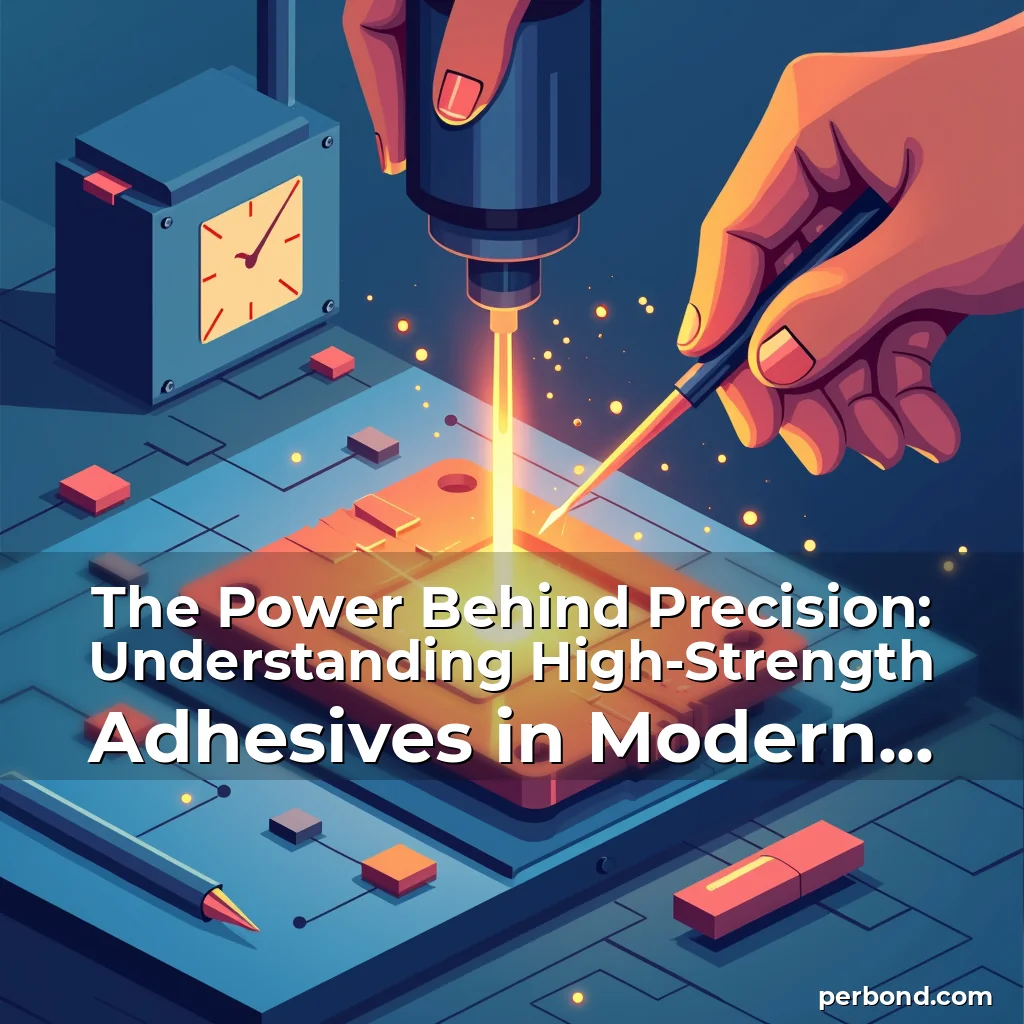
Emerging laser-assisted curing approaches allow precise control over polymer network formation by selectively activating functional groups within the adhesive matrix. This level of micro-level manipulation improves interfacial adhesion qualities substantially.
Experimental studies indicate that laser-treated joints can achieve lap shear strengths approaching 90% of theoretical maximum values, surpassing conventional oven-cured counterparts by approximately 25%. These enhancements translate directly into longer service intervals for critical infrastructure components.
The non-contact nature of laser curing minimizes risk of contamination during sensitive electronics assembly processes. This feature becomes especially valuable when working with microelectronic circuits measuring less than 0.5 mm in width.
Energy consumption metrics suggest that laser-based systems consume roughly 40% less power than standard convection ovens during typical curing cycles, presenting notable cost-saving opportunities for large-scale manufacturers.
Safety Considerations in Handling High-Strength Adhesives
While offering remarkable performance benefits, handling high-strength adhesives requires adherence to established safety protocols to protect workers’ health and prevent accidents. Proper ventilation systems mitigate inhalation risks associated with volatile organic compounds present in many formulations.
Gloves made from nitrile rubber or neoprene provide adequate protection against skin contact with reactive components found in most industrial adhesives. Eye protection equipment is mandatory whenever there’s potential splash hazard during mixing procedures.
Toxicological Profiles and Exposure Limits
Each adhesive product comes with Material Safety Data Sheets (MSDS) outlining permissible exposure limits and emergency response measures. These documents serve as vital references for occupational safety officers managing hazardous substance inventories.
Long-term exposure studies conducted on laboratory rats showed neurological effects at concentrations exceeding 50 ppm airborne particles sustained over six months duration. Human exposure thresholds remain lower due to physiological differences in metabolic processing rates.
Proper waste disposal follows EPA guidelines specifying segregated containers for chemically incompatible substances. Neutralizing agents might be required before disposing of leftover adhesive residues containing uncured polymers.
Training programs covering safe handling procedures must be updated annually to reflect new research findings and evolving regulatory requirements governing workplace chemical exposures.
Futuristic Directions in Adhesive Technology Development
Ongoing research efforts aim to develop next-generation adhesives incorporating self-healing properties inspired by biological organisms. Microcapsules embedded within polymer matrices release restorative agents automatically upon detecting damage initiation points.
Nanofiber reinforcement strategies involve embedding carbon nanotubes or graphene layers within adhesive films to create hybrid composites exhibiting enhanced toughness characteristics. Initial lab tests show promising results with fracture toughness increasing by up to 300%.
Smart Adhesives with Responsive Properties
Researchers are exploring stimuli-responsive adhesives that change bonding characteristics based on external signals such as temperature fluctuations or electrical currents. These adaptive materials could find applications in shape-memory alloys used for deployable space structures.
One prototype system demonstrated reversible adhesion capability triggered by alternating magnetic fields—an advancement that enables easy disassembly without damaging delicate instrumentation components during servicing operations.
Biodegradable options are being developed for temporary installations where scheduled removal is anticipated. These eco-friendly alternatives decompose naturally after fulfilling their intended service life span.
Integration with IoT platforms presents exciting possibilities for monitoring adhesive degradation states in real-time. Embedded sensors could alert maintenance crews when replacement becomes necessary before catastrophic failures occur.
Cost-Benefit Analysis for Industrial Adoption
Evaluating economic viability involves comparing initial investment costs against long-term operational savings achievable through adhesive implementation. Although upfront expenses may appear higher than traditional fasteners, lifecycle analyses frequently favor adhesive solutions.
Reduced labor costs from simplified assembly processes offset material expenditures in many cases. Automated dispensing systems decrease human error rates while improving repeatability across production batches.
- Initial costs: Vary widely depending on adhesive type, quantity purchased, and supplier contracts negotiated.
- Operational savings: Include decreased maintenance frequency, fewer part replacements, and improved quality assurance outcomes.
Return on investment timelines depend heavily on application-specific variables such as annual production volumes and defect rejection rates. Companies producing millions of units annually often see payback periods within two years.
Strategic partnerships with adhesive suppliers can yield volume discounts and technical support services enhancing implementation success probabilities. Custom-formulated solutions tailored to particular business needs add additional value propositions.
Case Studies Demonstrating Real-World Success
Automotive manufacturer XYZ implemented high-strength adhesives in frame assembly processes resulting in 18% weight reduction without compromising crashworthiness ratings. This translated into tangible fuel economy improvements measurable in real-world driving conditions.
The aerospace company ABC utilized advanced bonding techniques to construct lightweight fuselage segments reducing overall aircraft mass by nearly 15%. Fuel burn calculations projected annual savings exceeding $2 million per fleet unit operated internationally.
Medical Device Manufacturer DEF’s Experience
Manufacturer DEF replaced soldering techniques with conductive adhesives in sensor array fabrication achieving better signal fidelity and durability during accelerated aging tests. Product recalls related to connection failures dropped dramatically following this transition.
Field data collected over five years indicated that adhesive-bonded components exhibited 30% longer mean time between failures compared to traditionally joined equivalents. This improvement directly impacted warranty claims processing efficiencies.
Customer satisfaction surveys revealed a marked preference for devices assembled using advanced bonding methods citing improved reliability perceptions among end-users experiencing consistent performance outputs.
These case studies underscore the transformative potential of high-strength adhesives across diverse sectors demonstrating clear economic and performance benefits when appropriately integrated into manufacturing workflows.
Conclusion
As demonstrated through this comprehensive examination, high-strength adhesives continue to redefine what’s possible in modern engineering disciplines. Their multifaceted capabilities bridge gaps between seemingly incompatible materials while enabling unprecedented design innovations.
For professionals engaged in Perbond communities and other technical fields, staying informed about emerging adhesive technologies represents a strategic advantage. Continued exploration of novel bonding solutions will undoubtedly shape future technological landscapes across countless industries worldwide.