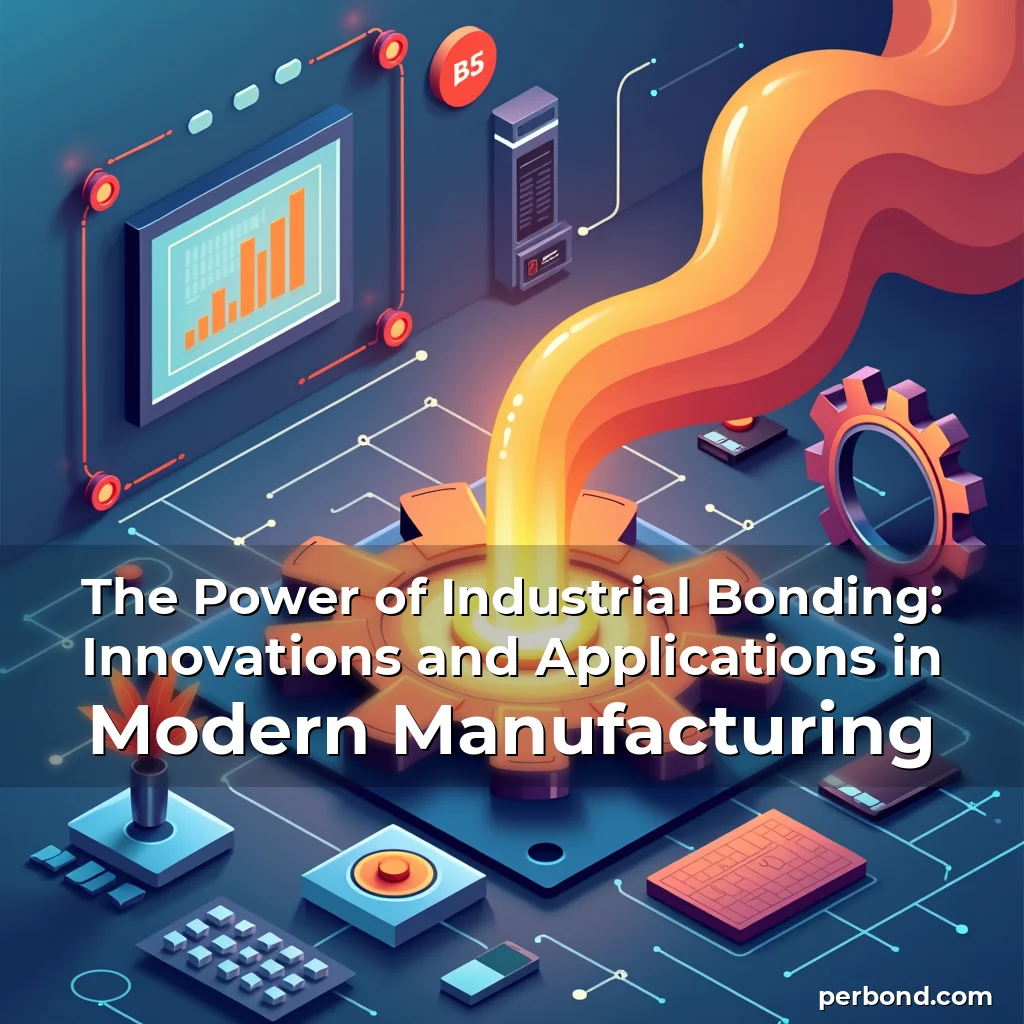
The Power of Industrial Bonding: Innovations and Applications in Modern Manufacturing
In today’s fast-paced manufacturing landscape, industrial bonding has emerged as a cornerstone technology that drives efficiency, precision, and durability across industries ranging from aerospace to electronics. This process involves joining materials through chemical adhesives, thermal methods, or mechanical means, enabling manufacturers to
In today’s fast-paced manufacturing landscape, industrial bonding has emerged as a cornerstone technology that drives efficiency, precision, and durability across industries ranging from aerospace to electronics. This process involves joining materials through chemical adhesives, thermal methods, or mechanical means, enabling manufacturers to create products that meet exacting standards without compromising structural integrity. Industrial bonding is not merely an assembly technique—it’s a science-driven approach that integrates material properties, environmental conditions, and advanced application methodologies. As companies seek sustainable solutions and cost-effective production strategies, understanding the nuances of industrial bonding becomes essential for innovation and competitiveness. Bonding processes can be broadly categorized based on their mechanism of action. Chemical adhesion relies on molecular interactions between surfaces, while physical bonds are formed by interlocking structures at the microscopic level. The choice between these methods depends on factors such as the type of materials being joined and the intended function of the final product. Each method presents distinct advantages and limitations. For instance, chemical adhesives offer flexibility in design but may require precise curing conditions. In contrast, mechanical fastening provides immediate strength but often necessitates additional components that increase weight and complexity. Thermal bonding techniques involve heating materials until they melt or fuse, commonly used in polymer-based assemblies where heat resistance is crucial. These methods vary widely depending on whether they’re applied under pressure or vacuum environments. Regardless of the chosen technique, surface preparation plays a critical role in ensuring successful bonding outcomes. Cleaning agents, primers, and specialized treatments help remove contaminants that could weaken adhesive performance over time. Selecting appropriate materials for bonding is fundamental to achieving optimal results. Metals, ceramics, composites, and various types of plastics each have unique characteristics that influence compatibility with different bonding technologies. For metal-to-metal joins, high-strength epoxies or weldable adhesives provide robust connections capable of enduring extreme temperatures and stresses. However, certain metals like aluminum may require special considerations due to their reactivity with standard bonding compounds. Ceramics present another challenge because their non-porous nature makes them less receptive to traditional adhesives unless pre-treated appropriately. Techniques involving silane coupling agents enhance adhesion by creating reactive sites on ceramic surfaces before applying any bondant substance. Polymer-based substrates benefit significantly from thermoplastic welding or solvent-based glues which allow for quick assembly times along with good impact resistance features necessary in dynamic operating environments. Recent years have seen significant progress in how composite materials are bonded together within industrial settings. Carbon fiber reinforced polymers (CFRPs), known for their exceptional strength-to-weight ratio, now utilize advanced resin transfer molding techniques combined with automated layup systems. These innovations enable manufacturers to produce complex shapes efficiently while maintaining consistent quality control measures throughout production runs. Additionally, hybrid approaches incorporating both primary and secondary bonding layers contribute towards improved fatigue life expectancy of finished goods. The versatility of industrial bonding extends far beyond conventional uses found in construction sectors. Within aerospace engineering alone, thousands of components rely solely upon adhesive joints rather than traditional rivet systems for assembling fuselages and wing panels. This shift towards using adhesives instead of metallic connectors reduces overall aircraft weight substantially—an advantage directly translating into fuel savings during flight operations. Moreover, bonded structures tend to exhibit superior stress distribution capabilities compared to those relying purely on mechanical fixings. In electronics manufacturing, micro-bonding technologies facilitate miniaturization efforts required for modern devices containing intricate circuit boards filled with densely packed components. Ultrasonic welding and conductive pastes play pivotal roles here, allowing seamless integration even when dealing with dissimilar materials. Medical device fabrication also heavily utilizes industrial bonding practices—especially concerning implantable prosthetics where biocompatibility must be strictly maintained alongside mechanical reliability requirements imposed by human physiology. Adopting effective industrial bonding strategies can yield considerable economic benefits for organizations engaged in mass production activities. Reduced need for separate hardware pieces translates into lower inventory management costs associated with storing nuts, bolts, washers etcetera. Furthermore, simplified assembly procedures mean fewer labor hours spent on manual tasks related to tightening screws or aligning brackets accurately—which subsequently lowers workforce training expenses considerably too. However, initial investments required for acquiring specialty equipment might pose challenges initially especially small scale enterprises looking expand rapidly yet maintain lean operational models. Despite these upfront expenditures though long term savings resulting from increased productivity rates justify adopting newer generation bonding solutions wherever feasible economically speaking. With growing global emphasis placed upon reducing carbon footprints across all facets of industry including manufacturing segments, eco-friendly bonding alternatives have gained traction recently among environmentally conscious firms worldwide. VOC-free adhesives represent one notable example helping reduce harmful emissions generated during coating application stages thereby improving workplace safety profiles simultaneously fulfilling regulatory compliance mandates set forth by governmental bodies overseeing occupational health protocols. Additionally recycability aspects become increasingly relevant particularly regarding polymer-based joint formations wherein end-of-life disposal options remain limited unless specifically engineered during original design phases itself taking circular economy principles seriously right from inception stage onwards. Some pioneering companies have started developing bio-resorbable bonding agents tailored explicitly towards temporary medical applications ensuring complete degradation post-service period thus eliminating potential risks linked with residual foreign substances left behind inside biological organisms permanently. Ongoing research initiatives continually push boundaries relating to what current technological limitations prevent us from fully realizing next-generation possibilities inherent within field known generally referred simply as “industrial bonding” nowadays. Nanotechnology advancements promise enhanced performance levels achievable via incorporation nanomaterials directly into adhesive formulations leading possibly towards self-healing coatings capable detecting damage autonomously initiating repair mechanisms automatically without external intervention whatsoever. Artificial intelligence integrated smart sensors embedded within adhesive layers monitor real-time data parameters continuously assessing structural health statuses dynamically adjusting accordingly whenever anomalies detected promptly mitigating failure risks proactively before becoming catastrophic events actually occurring physically manifest themselves visibly observable externally. Moreover development ongoing regarding digital twin implementations allows engineers simulate entire bonding scenarios virtually prior committing resources actual physical prototyping thereby drastically cutting down lead times involved new product launches significantly boosting R&D cycles effectiveness overall. While numerous advantages accompany embracing latest developments surrounding industrial bonding domain still several obstacles hinder widespread implementation globally affecting diverse regions differently according particular local contexts prevailing there respectively. Lack adequate technical expertise remains pressing issue primarily amongst smaller businesses unable afford expensive consultancy services usually reserved larger corporations possessing dedicated departments devoted exclusively researching optimizing internal processes employing state-of-art methodologies available currently market place. Regulatory disparities further complicate matters since varying national legislation governing permissible usage levels hazardous chemicals utilized within adhesive compositions necessitate customized formulation adjustments complying respective jurisdictional rules complicating cross-border trade logistics immensely adding unnecessary bureaucratic hurdles slowing progress otherwise straightforward adoption pathways would follow naturally otherwise. Educational institutions play vital role addressing knowledge gaps existing populace however insufficient curriculum updates frequently lagging behind rapid pace innovation making graduates ill-prepared tackle contemporary challenges faced professionals daily basis working frontline positions responsible executing complex procedures regularly encountered day-to-day operations inside factories everywhere around globe constantly evolving technically demanding environments. Industrial bonding stands at the forefront of modern manufacturing, offering transformative potential across multiple sectors. Its ability to merge disparate elements seamlessly while enhancing structural resilience underscores its importance in driving future technological breakthroughs. As we continue exploring uncharted territories within this ever-evolving discipline staying abreast emerging trends remains imperative ensuring continued growth momentum propelling humanity forward toward unprecedented heights achievement collectively shaping tomorrow’s world together hand-in-hand.The Power of Industrial Bonding: Innovations and Applications in Modern Manufacturing
Understanding the Fundamentals of Industrial Bonding
Materials Used in Industrial Bonding Processes
Advancements in Composite Material Bonding
Applications Across Industries: From Aerospace To Electronics
Economic Impact And Cost Efficiency Considerations
Sustainability And Environmental Responsibility In Bonding Practices
Trends Shaping Future Of Industrial Bonding Technologies
Challenges Facing Industrial Bonding Adoption Globally
Conclusion